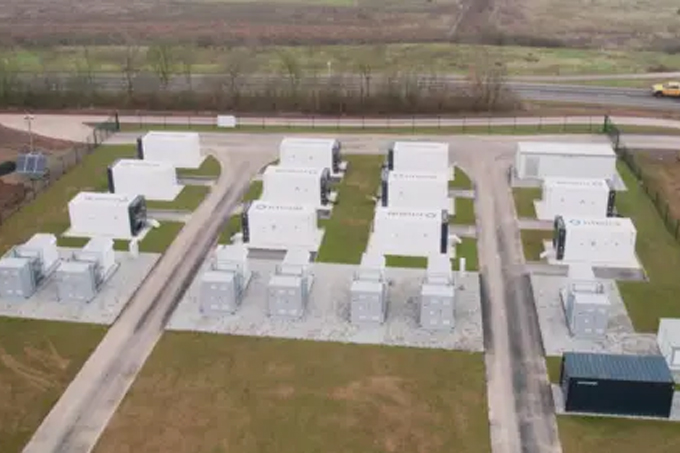
The European battery storage market is expanding at an unprecedented rate.
According to the latest “Solar+” report released by SolarPower Europe, by the end of 2025, the total installed power of energy storage systems in the European Union had reached 40 gigawatts (GW), and the total energy storage capacity had reached 77 gigawatt-hours (GWh), an increase of over 45% compared to the previous year. The “Solar+” scenario in the report predicts that by 2030, the installed power of energy storage in the European Union will increase to 171 gigawatts, more than quadrupling the current level; the energy storage capacity will increase to 598 gigawatt-hours, nearly eight times the current scale.
As the installed capacity of solar and wind energy continues to increase, the regulation pressure on the European power grid is constantly rising. Energy storage systems need to undertake longer tasks of power transfer and peak shaving. Therefore, the average storage duration is expected to increase from the current 1.9 hours to 3.5 hours. This technological leap further highlights the urgent need to build more energy storage systems with grid-supporting capabilities.
The ees Europe, which will be held in Munich from June 23rd to 25th, will showcase how the industry is addressing this massive market demand. As the largest battery and energy storage system professional exhibition in Europe, ees Europe brings together global industry leaders. Exhibitors will showcase a series of innovative achievements that have been commercially implemented, covering artificial intelligence applications in energy storage management and sodium-ion battery technology, etc., aiming to reduce power costs and enhance grid stability. As an important part of the The smarter E Europe exhibition alliance, ees Europe will gather approximately 2,800 exhibitors and over 100,000 industry decision-makers, jointly exploring how to deeply integrate grid-level energy storage into future energy infrastructure and promoting its sustainable commercial value.
By flexibly allocating electricity at different times, the grid energy storage system can effectively absorb and release electrical energy, preventing the continuous increase of negative electricity prices, thereby maintaining the economic viability and return on investment of large-scale solar energy projects. At the same time, the coordinated development of energy storage and renewable energy is also enhancing the ability of the European economy to withstand geopolitical risks and reducing its reliance on external energy supplies. In just the first two months following the outbreak of the recent Middle East crisis, the additional solar power generation saved the European Union approximately 8.5 billion euros in gas import expenditures.
These data clearly demonstrate that the energy storage market is well-prepared to play its due role in the future energy system. In 2025, the EU’s new battery energy storage capacity reached 27.1 gigawatt-hours (GWh), of which 55% was provided by large battery energy storage systems (BESS) built with private capital investment and without any subsidy support at all. However, if each member state takes uncoordinated regulatory intervention measures, this strong development momentum may face the risk of being weakened.
EES Europe 2026: Focusing on Flexibility and Market Design
The ees Europe Conference, which will be held in Munich from June 22nd to 23rd, will showcase how the European industry is responding to this urgent and far-reaching transformation demand from two dimensions: technological innovation and strategic planning. During the exhibition, the ees Forum located in the C2 exhibition hall will conduct in-depth exchanges through various forms such as special forums and roundtable discussions, focusing on the European energy policy and regulatory framework. The ees Innovation Hub Stage located in the B0 exhibition hall will become the innovation engine of this exhibition. Experts from leading European research institutions and industry enterprises will present a series of cutting-edge projects and innovative achievements here, covering the application of artificial intelligence in battery research and development, best practices in circular economy, as well as development strategies for promoting the establishment of a more resilient and autonomous battery manufacturing industry chain in Europe.