
Recently, the Brazilian Energy Storage Solutions Association (Absae) convened industry executives to discuss how energy storage systems can address the systemic challenges faced by the Brazilian power industry. The participants pointed out that the crux of the issue is not “the competition between battery storage systems and thermal power generation facilities”, nor “the trade-off between renewable energy and energy security”, but rather how to find the best power supply combination that balances safety, electricity prices, renewability and flexibility.
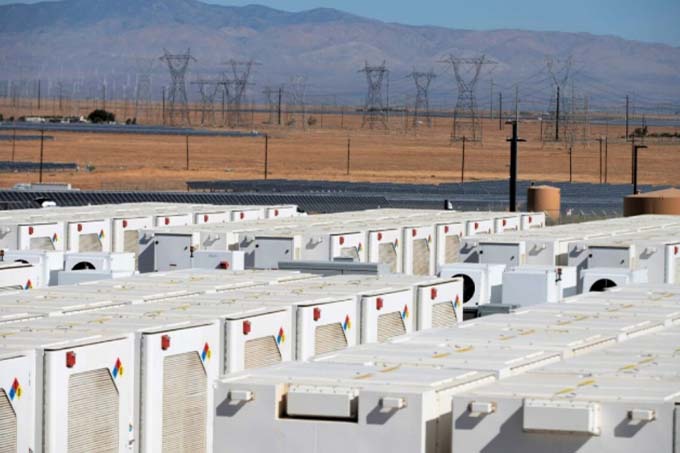
Battery energy storage systems are already a mature energy storage technology, and their total installed capacity globally has surpassed that of pumped storage facilities. However, it is projected that by 2026, approximately 300 GW of battery energy storage systems will be deployed globally, while Brazil’s cumulative installed capacity is still less than 1 GW.
At a recent online seminar organized by the Brazilian Energy Storage Solutions Association (Absae), participants had an in-depth discussion on the role of energy storage systems in the modernization process of the power system. Currently, the Brazilian industry is eagerly awaiting the introduction of a dedicated auction mechanism for energy storage systems, and is also actively discussing the relevant matters regarding the planned 16.5GW thermal power generation facilities to ensure the capacity of the power system.
Fábio Lima, the executive director of the Brazilian Energy Storage Solutions Association (Absae), emphasized that the grid planning needs to adopt a more refined approach. He said: “The focus of our discussion should not be the opposition between battery energy storage systems and thermal power generation facilities, nor should it be the trade-off between renewable energy and energy security. The issue is: how to find the best power supply combination among safety, price, renewability and flexibility. In this combination, the battery energy storage system is definitely part of the solution.”
Lima pointed out that battery energy storage systems can transfer the electricity generated by renewable energy sources to peak demand periods, thereby delaying the investment in grid expansion and facilitating the connection of new loads.
Meanwhile, Markus Vlasits, the president of the Brazilian Energy Storage Solutions Association (Absae), stated that although battery energy storage systems are one of the lowest-cost solutions globally for addressing various grid challenges, the advancement of the Brazilian energy storage market remains slow. Although the deployment scale of user-side energy storage systems continues to grow, Vlasits believes that the approximately 1 GW of battery energy storage systems deployed is far from reaching the potential level of the country.
He said: “We need clear price signals, a dedicated bidding mechanism, and a formally released regulatory framework. At the same time, the user-side energy storage market is still advancing and is helping to alleviate the load pressure on the power system.”
Chile Experience: Ancillary Services and Electricity Curtailment Reduction
Atlas Renewable Energy Company has set an example for the deployment and integration of energy storage systems. The company shared its experience in operating a 200MW/800MWh battery energy storage system in Chile, which was operated in conjunction with the 244MW Soldel Desierto solar power plant.
According to Fabio Bortoluzo, the regional director of Atlas Renewable Energy in Chile, when this battery energy storage system is used for auxiliary services such as primary frequency regulation and secondary frequency regulation, the availability rate recorded by the Chilean grid dispatching agency exceeds 98%. The battery energy storage system significantly reduces the price fluctuation range of the Soldel Desierto photovoltaic-storage project and reduces the amount of solar power generation that is discarded. Currently, the installed capacity of battery energy storage systems being deployed in Chile has reached 8 GW.
Grid-connected energy storage technology and grid capacity expansion
The National Operator of the Brazilian Power System (ONS) has formulated corresponding technical specifications for energy storage systems that can provide “virtual inertia” to simulate the behavior of synchronous generators. Energy storage systems using grid-connected technology can operate both in grid-connected mode and off-grid mode, and possess key functions such as black start and inertia support.
Valer Company took an example of a certain storm in the UK that caused the wind farm to lose power, and emphasized the crucial role of battery energy storage systems in frequency regulation: “If there had been grid-forming technology at that time, the system would have recovered much faster.”
In Brazil, the value of energy storage systems as a tool for expanding the power grid has become evident. Renato Guimarães, the expansion and research manager of ISA Energia Brasil, highlighted the battery energy storage project at the Registro substation – which is regarded as the first large-scale energy storage system in Brazil. This energy storage system replaced the traditional diesel power generation solution and successfully prevented power outages during the summer peak electricity consumption period in the coastal area of São Paulo state.
Looking forward to the deployment of large-scale utility-scale battery energy storage systems in the future, Guimarães believes that this project can serve as a reference blueprint for Brazil. He said: “The battery energy storage system used for capacity backup will achieve peak shaving and valley filling at the power system level, rather than just having an effect locally like the Registro project. This demonstrates from a practical perspective how the energy storage system can solve the power bottleneck problem.”
The Brazilian federal energy planning department has begun to pay attention to this trend. The Brazilian Energy Planning Institute has recognized energy storage systems as the most feasible solution for infrastructure construction in some remote areas, and has proposed to bid for a grid-connected energy storage system with a capacity of 100MW/200MWh in a certain tender in 2027.