
It is reported that recently, the Australian government introduced a special reserved capacity for Indigenous people in the 9th and 10th rounds of the Capacity Investment Scheme (CIS) bidding. For each round of the bidding, a dedicated share of the total capacity target was set. Projects applying for the bid must commit to equity participation or profit-sharing arrangements for Indigenous people in order to participate.
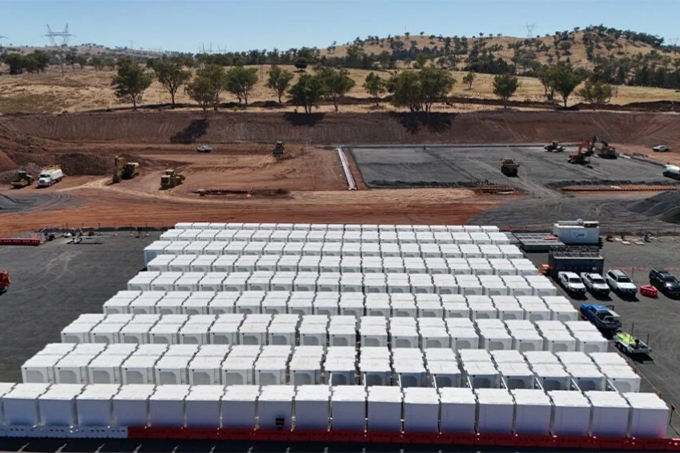
The Bulabul battery energy storage system owned and operated by Ampyr Australia has been involved in an agreement regarding the indigenous people’s rights for this project last year.
In the 9th round of bidding, this round solicited 5GW of renewable energy power generation facilities for the Australian National Electricity Market (NEM), among which 500MW capacity was specifically reserved for projects that met the criteria for indigenous people.
Meanwhile, the 10th round of bidding plans to solicit 4GW of controllable power equipment (i.e., 16GWh battery energy storage systems), which is likely to be the last round of controllable capacity bidding in the Australian National Electricity Market (NEM) under the CIS framework. Under the same framework, an additional 500MW/2GWh of energy storage capacity has been reserved for this round.
These two reserved measures mark the first time in Australia that, in the same round of bidding, an exclusive capacity for indigenous people has been set for both power generation projects and energy storage projects.
If a bidder wishes to be eligible for any reserved portion of the bidding process, it must demonstrate that it has made a commitment with the indigenous partners, offering at least 5% equity participation or a share of the project profits to the partners.
Participation in the reservation is voluntary. Projects that have not chosen to participate or do not meet the eligibility requirements can still be evaluated according to the standard bidding process. Regardless of whether they participate in the reservation or not, all bidding projects are subject to the same qualification and selection criteria.
This pilot will be evaluated after the completion of the 9th and 10th rounds of the Capacity Investment Scheme (CIS) tenders. In future tenders, adjustments may be made based on the evaluation results.
The Australian government stated that this move is based on the reality of the large-scale and rapid development of renewable energy power generation facilities and energy storage projects on indigenous land, as well as the practical need to enable indigenous communities to share in the fruits of economic development, rather than merely serving as the “hosts” of infrastructure.
From the scoring criteria to special quotas: The upgrading of indigenous people’s rights and interests
Since the inception of the Capacity Investment Scheme (CIS framework), indigenous factors have been taken into consideration from the very beginning. However, previously they were only regarded as one of the criteria (selection standards) rather than an independent capacity reservation.
As of now, this plan has completed 8 rounds of bidding in the Australian National Electricity Market (NEM), and two rounds of bidding in the Western Australia market. The cumulative procurement scale has significantly increased compared to the earlier stage.
According to previous reports, in the third round of the dispatchable project bidding in the Australian National Electricity Market (NEM), bidders submitted a total of 135GWh of storage system applications for the target of 16GWh storage system. This clearly shows the abundance of the project scale submitted by the storage developers relative to the available contract capacity. It is precisely this competitive situation that enabled the Australian government to strengthen social and economic requirements while not dampening the enthusiasm of market participants.
In the fourth round of bidding, the energy storage system in the solar energy + energy storage project was awarded a contract of 11.4 GWh. Among the 20 winning projects, 3 promised to share the profits with the indigenous communities, while the remaining projects committed to subcontracting cooperation, training and labor force development.
In the 7th round of bidding, 19 projects were successfully awarded (including 7.8 GW of renewable energy power generation facilities and 7.9 GWh of battery energy storage systems), and the total amount of community welfare commitments related to indigenous outcomes was close to 1.2 billion Australian dollars (approximately 830 million US dollars).
From treating the indigenous people’s achievements as a bonus factor in the evaluation, to specifically reserving capacity for the winning projects, this shift marks a structural upgrade in the Australian government’s use of the procurement framework to drive actual outcomes – rather than merely rewarding the achievements when they occur.
The design of the reserve mechanism addresses a highly concerned issue: In competitive bidding, community welfare commitments are often regarded as “add-ons” rather than “core elements” of project development.
The energy storage projects included in the reserved scope still need to meet the same technical and financial qualification standards as the other bidders in the 10th round, including having a reasonable business operation plan. The registration deadline for the 10th round of bidding is August 4, 2026, and the Q&A session will last until August 11, 2026.