
15%
Among the five European markets, when heat pumps with time-of-use electricity pricing are equipped with battery energy storage, the annual heating cost is reduced by an average of
$148 per year
compared to the fixed electricity pricing scenario. The highest value of the demand response income for a heat pump with battery energy storage in San Francisco, as shown in the model.
12%
Expected increase in the upfront cost of heat pumps after being equipped with 10kWh batteries
Manufacturers are combining heat pumps with energy storage to adjust the time when electricity users draw power from the grid. According to Bloomberg New Energy Finance analysis, the cost savings for households from this move are too little to offset the upfront costs. Greater value may lie in scalability: Google is funding California households to install Carrier’s newly launched heat pumps equipped with battery storage. Such systems can help large power users offset the growing demand for electricity.
Heat pump manufacturers are beginning to combine residential heating and cooling with energy storage systems, creating a new source of flexible electricity demand. Carrier is the first manufacturer to physically integrate batteries into heat pumps. Other manufacturers are coordinating the operation of heat pumps with independent household battery storage through home energy management systems.
Batteries can be charged when electricity prices are low or when grid demand is low, and then supply power to the heat pump without drawing power from the grid. This flexibility can create value in two ways: moving electricity away from periods with high retail electricity prices or participating in projects that earn revenue by reducing grid demand during system stress.
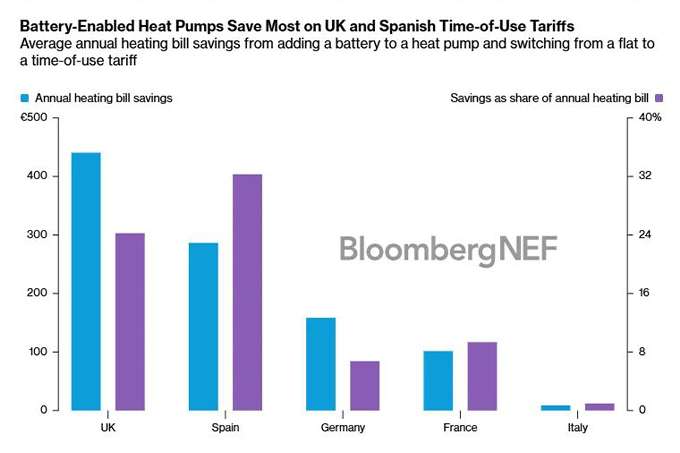
Bloomberg New Energy Finance research has found that heat pumps equipped with battery storage can reduce electricity costs compared to operating them in a fixed price environment under time-of-use electricity pricing. In the UK, such systems can achieve an annual absolute savings of 441 euros (equivalent to 511 US dollars). In Spain, savings are the highest, at 32%. In Germany and France, cost reductions are smaller, and in Italy, there is almost no savings.
Only the savings from heating are too high for standalone batteries to be economically viable. Bloomberg New Energy Finance estimates that the installation cost of a 10kWh standalone household battery is approximately 7,100 euros, increasing the upfront cost of the heat pump by about 60%. For technologies where high installation costs are already hindering their widespread adoption, this increase is difficult to overcome.